
How Richmond County Search Starts
Address in hand, start with the public property-card site. When that comes up empty, the county offers other routes into the same records. Try Account, Map, Name, Location, or Address mode instead. A parcel number is the strongest cross-reference you can carry forward, so write it down exactly as displayed.
The card itself is generous with leads. It can show the owner of record, situs and mailing addresses, the assessment, the legal description, and an instrument reference, while the deed index works by party name instead. No single search box stitches these sources into a live title report. That assembly is your job.
Once a card appears, treat its owner or map and account number as a bridge. Take the name to the Clerk's deed index for the newest deed. Ask the Treasurer only about a current balance. Open the GIS map for visual orientation, since these offices keep separate records that answer separate questions.
A failed query is rarely a missing record. Broaden the search before concluding anything. The county itself suggests dropping to a last name alone when a full owner name returns nothing.
- Enter the situs address in Richmond County Property Cards; try Location or a shorter street term if needed.
- Copy the owner name, mailing and situs addresses, account/map number, assessment and legal description.
- Search the Richmond County Clerk's SRA index by grantor or grantee to locate a deed reference.
- Use the county GIS and printable tax map for context, then read the recorded plat for legal lines.
- Ask the appropriate custodian for records not online; verify current copy fees with the Clerk.
Richmond County Property Card Search Fields
The public landing page displays several search modes without publishing the exact account format or every dynamic label. Pick the mode matching what you already hold. Save each result exactly as written. Instrument number and subdivision make useful secondary clues whenever a property record includes them.
| Search mode | What to enter | What Richmond County documents |
|---|---|---|
| Address | Situs street address | Address mode; use a shorter form if the full line misses |
| Location | Property location term | Separate from mailing address; exact syntax is not published |
| Name | Owner name or surname | Try surname alone when a full-name search fails |
| Account or Map | Returned county identifier | Exact format is not published; retain punctuation and spacing |
| Instrument or Subdivision | Known reference, if available | Optional secondary search clues on a property card |
The county property-card interface is open to the public, and the Commissioner of the Revenue maintains the owner data and tax maps behind it. The Richmond County online-services hub lists where its property cards, tax maps, GIS, and land-record tools are linked.
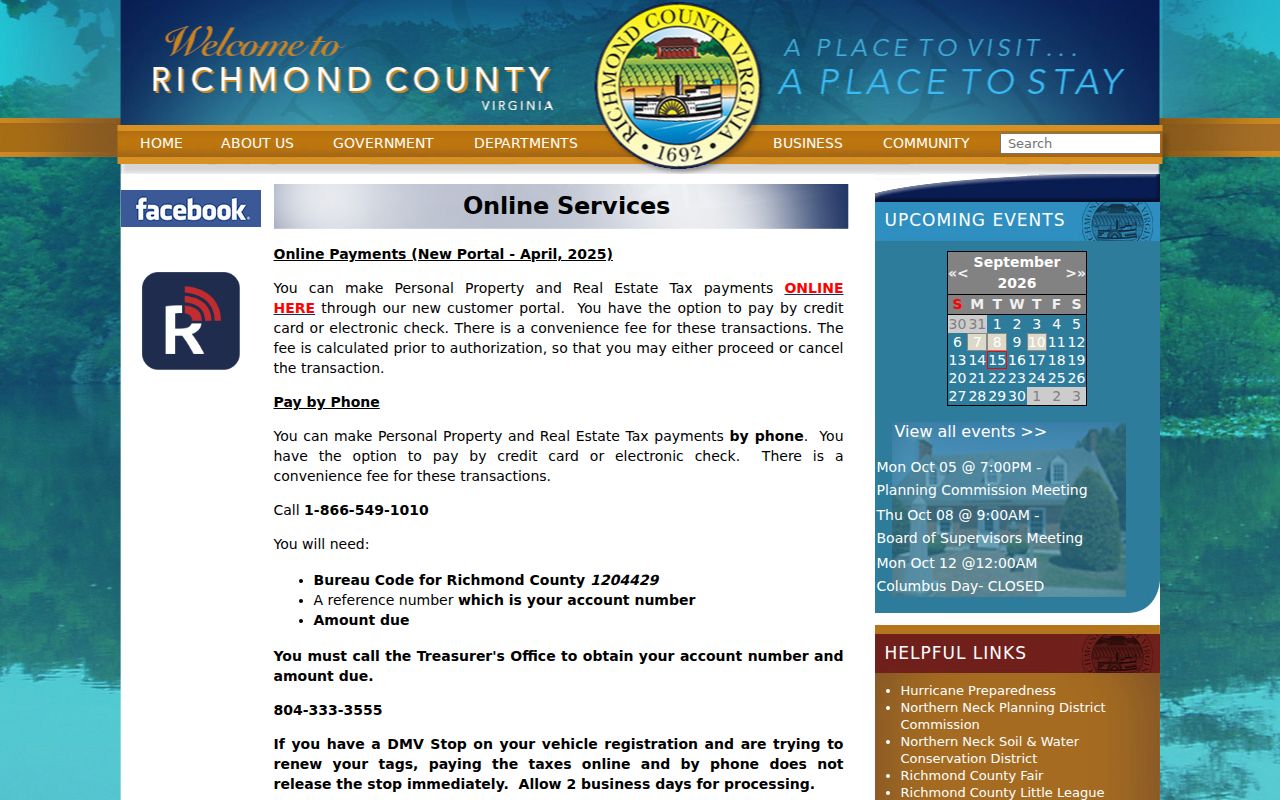
Match the service to the question. Ask the Commissioner about assessment details, the Treasurer about a balance, and the Clerk about a recorded deed.
Search Richmond County by Rural Address
Rural Richmond County complicates address work. Postal lines and situs fields do not always agree. A Warsaw mailing address, for instance, proves nothing about the town boundary. A route, farm, or road name may be the sharpest clue available. The account and map number the county returns is the stable reference for every step that follows. When a street number fails, switch to Location mode. Strip directional words, or search by the owner's surname alone.
The county interface keeps Address and Location as distinct modes. A street-only query is not guaranteed to return a complete block list. One broad search should not be trusted to surface every parcel on a road. Open each returned parcel card and retain its legal description. When you hold an instrument number or subdivision name, the county says those can also be used.
Near Warsaw, treat the official town map as a second layer only. The charter ties the town limit to an annexation order. It was recorded in Richmond County Common Law Order Book 8, page 425. Mailing geography and corporate limits are different things entirely. Neither substitutes for the other in a parcel search.
What Richmond County Property Cards Show
A Richmond County property card is an assessment and parcel record, nothing more. The landing page displays no sample card to preview. When a result opens, capture the identifiers it offers. Grab the parcel number, owner, and legal description first. Not every card shows every field, and none of them is a current deed image.
| Owner of Record | Owner name shown in the assessment record; verify a later transfer in the Clerk's deed index |
|---|---|
| Situs / Mailing Address | Land location and owner correspondence address, which may differ |
| Account / Map | County cross-reference; the formal number format is not published |
| Assessment | Land, improvements, total value and the applicable assessment date where shown |
| Legal Description | District, acreage, subdivision or deed reference where shown |
| Instrument | Searchable when a property card supplies the number; confirm deed details with the Clerk |
Read the card with care. The mailing line is not the land's location. The assessed figure is not the last sale price. A current tax balance belongs to the Treasurer, not necessarily to the Commissioner's card. The card points to the next record. It cannot certify ownership, clear a lien, or establish a surveyed boundary.
Richmond County Deed Search Access
The Clerk's deed index runs on party names. Start with the current grantee. Then search the same party as a grantor to catch any transfer out. Richmond County does not document parcel-number search within the deed index. Its public landing page exposes no live search fields. From any result, keep the document type, date, parties, book and page or instrument number, and the legal description.
Index information is public. Images are not. Access is limited to approved subscribers under local rules. The county's notices describe subscriber fees, so confirm current terms before paying. For a single copy, an in-person visit often works better. A direct request to the Clerk works too. The county publishes no specific copy price, so never assume one.
The Virginia Statewide Searchable Real Estate Index provides the statewide entry point. The county Clerk controls local image access to Richmond County deed records.
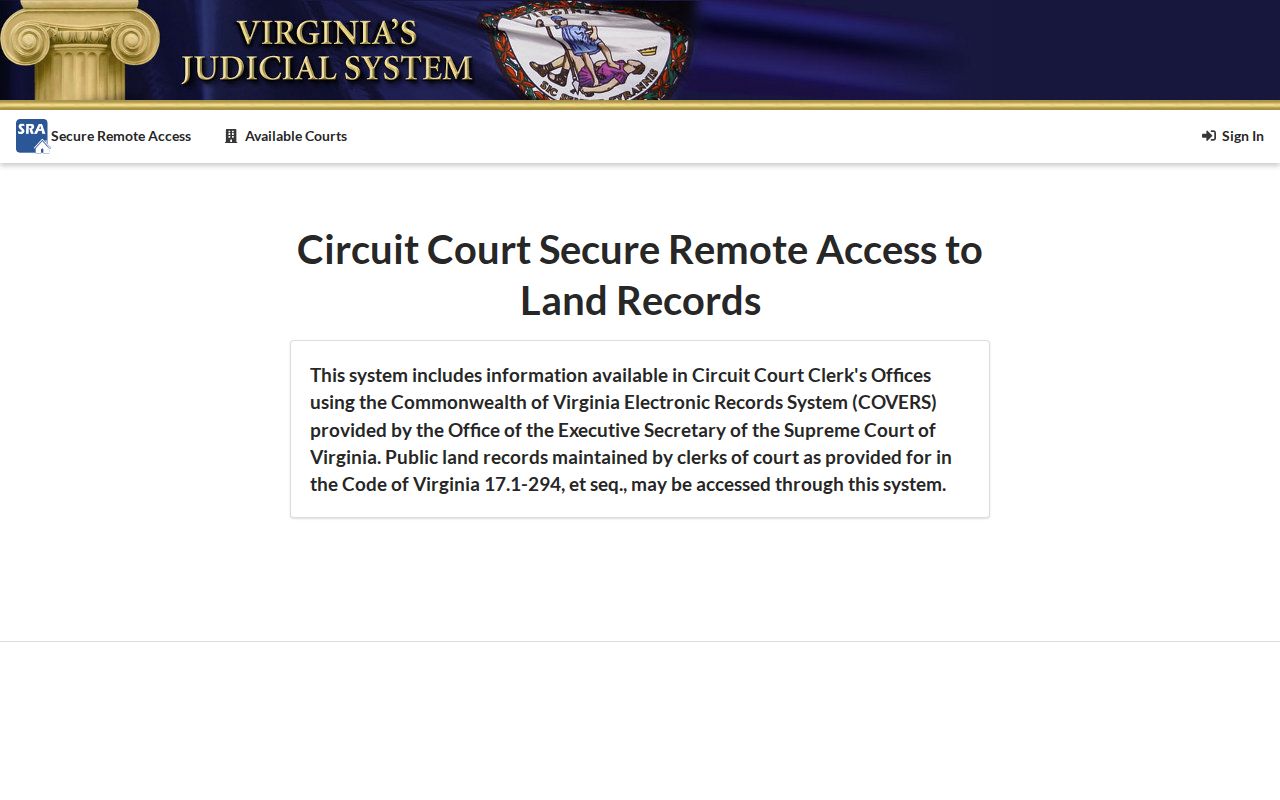
The Clerk's land-record page splits access two ways. A public index is open to anyone. A subscriber tier is needed for images. That difference matters for a Richmond County property search. A name match alone may not show the full document behind it. When an online search comes up thin, the instrument reference belongs at the Clerk's office. Staff there can pull what the index only summarizes. Computerized circuit-court records in the county reach back to 1753, an unusually deep run. Still, an old book reference is worth confirming against the Library of Virginia catalog before you request the item. A free remote image is not promised for every year.
Richmond County Owner Data Has a Date
The county makes a clear distinction between its January 1, 2024 reassessment and the deeded-owner data dated December 31, 2022. That snapshot is why a card should be treated as a starting point for a property search rather than a live ownership certificate. A deed recorded later can identify a newer grantee even when the assessment card still carries an earlier name.
When the card date and deed date do not align, use the Clerk's index to check the later instrument. The Commissioner is the right office for assessment questions at (804) 333-3722; the Clerk is the records custodian for the deed, at (804) 333-3781. Neither a county map nor a card can replace the recorded instrument when the question is who took title.
Richmond County Tax Balance Search
A property search and a tax balance search are different chores in Richmond County. The Treasurer's customer portal, launched April 2025, handles real-estate tax inquiry and payment online. The county also accepts payment by phone, mail, in person, and by drop box. Online payments carry a calculated convenience fee. Phone payment runs through 1-866-549-1010 with bureau code 1204429, and the Treasurer's staff at (804) 333-3555 can confirm the account number and amount due.
No bill in the mailbox does not erase the obligation. The taxpayer still owes payment. Ask the Treasurer for the balance and due status rather than reading assessment data as a tax bill. The December 5 due date, the December 6 penalty, and the January 1 interest date can all shape a property review. Even so, a Richmond County property records search still begins with the parcel identifier, and the tax bill follows from it.
Search Richmond County by Address, Owner, or Map
Address works well as a first key when the situs is known. Owner search earns its keep in rural parts of Richmond County. It also helps when an exact address is fuzzy. Account and Map modes shine after a card has handed you the county's own identifier. Every key has blind spots, though. Name variants can hide a party. An old mailing address can differ from the property itself. The county has also not published a formal account-number syntax, so that field rewards patience.
| Search Key | Best For | Where It Works | Watch Out |
|---|---|---|---|
| Address | A known situs or road location | Property Cards; GIS orientation | Postal and situs labels can differ |
| Owner name | A known owner or deed party | Property Cards; Clerk party index | Try surname and name variants |
| Account / Map | A parcel already identified by the county | Property Cards; tax maps | Exact format is not published |
Not a title search. A Richmond County property search connects you with assessment and recorded-index sources, but it does not guarantee clear title, find every unrecorded claim or settle a boundary. Use the deed and plat, and consult the right professional when the answer carries legal or financial weight.
A useful search note preserves the query and the result, not just a copied name. Write down the portal and mode used. Record the spelling or address entered, the date searched, and the returned account or map number. If a card displays an instrument reference, capture that too. The same owner name can appear on several tracts. Compare district, acreage, subdivision, and legal description before treating two results as the same property.
Missing results call for one change at a time. Shorten a rural address, or try Location separately from Address. Remove a first name and search the surname alone. Never guess the account-number format, since the county has published no syntax guide. The public interface may still refuse a card. Ask the Commissioner whether another identifier exists. A deed question goes to the Clerk's index with the party name. A payment question goes to the Treasurer with the account reference.
A Richmond County card can carry two extra clues. These are an instrument number and a subdivision name, when present. The instrument can point toward a recorded deed or plat. Verify it through the Clerk, though, because the card does not reproduce the full document. A subdivision term may lead to a set of plats. A generic name can cover more than one filing. Compare source tract, district, acreage, dates, and lot reference before deciding a result matches your address.
Virginia FOIA can back a specific request for an existing record that no portal reaches. Identify the parcel or parties, the approximate date, and the record type. Ask for a cost estimate if retrieval or copies could take time. A county office can provide existing records. It need not build a custom property search or render a legal conclusion. A precise request bridges an online gap cleanly. It does so without confusing the assessment roll, the land index, and the billing account.