
Richmond County Value Types
Value figures in Richmond County answer different questions. An assessment, a market estimate, and the price stated in a recorded deed are separate facts. Each has separate sources and dates. The county states that real estate is assessed at 100% of fair market value. It draws on recent sales across the county. Even so, an assessment is a tax-roll value, not an independent appraisal. When a deed shows consideration, that amount is its own transaction detail. The county records it for a different purpose.
| Value | What It Is | Where |
|---|---|---|
| Assessed value | County's value for the assessment roll | Commissioner property card |
| Market value | Fair-market basis used in county reassessment | Assessment method; not a separate appraisal report |
| Sale consideration | Amount stated for a recorded transaction, if shown | Recorded deed or instrument |
| Land and improvements | Separate card values where the record displays them | Property card; field visibility can vary |
Recent countywide sales shape the assessment method. They do not set what a buyer will pay for one parcel. A sale can involve terms or property conditions that never reach the card. Some cards may show a land and improvement split or a sale field, but treat those as record details you might find rather than guaranteed features of every property search.
Richmond County's Assessment Level
Richmond County values real estate at 100% of fair market value. That figure comes from the county's own statement. The method relies on recent sales throughout the county. That is the assessment level. It is not a promise that every parcel will sell for its card amount. A rural property's access, acreage, structures, easements, and waterfront conditions can differ from nearby sales. A mass appraisal does not fully capture those differences. The Commissioner of the Revenue maintains the real-estate assessment information. Ask that office about a card's land, improvement, and total values. Staff can explain how they were applied to a specific parcel. The Treasurer handles the tax bill and payment balance. A recorded deed shows the price stated in an instrument when the record includes it. Keep those figures in separate columns whenever you compare.
Richmond County Revaluation Date
Richmond County runs a general reassessment every four to five years. The latest effective date is January 1, 2024. The county's reassessment card search shows a dated assessment view. Its deeded-owner snapshot reflects December 31, 2022. That gap between dates is a cue. Check the recorded transfer of a parcel separately from its value.
Before comparing any sale, note the assessment year and its effective date. A 2024 assessment is not a 2026 sale estimate. Richmond County publishes no Warsaw-only sales trend. Rely on the countywide method and the parcel's current card rather than assuming a town trend.
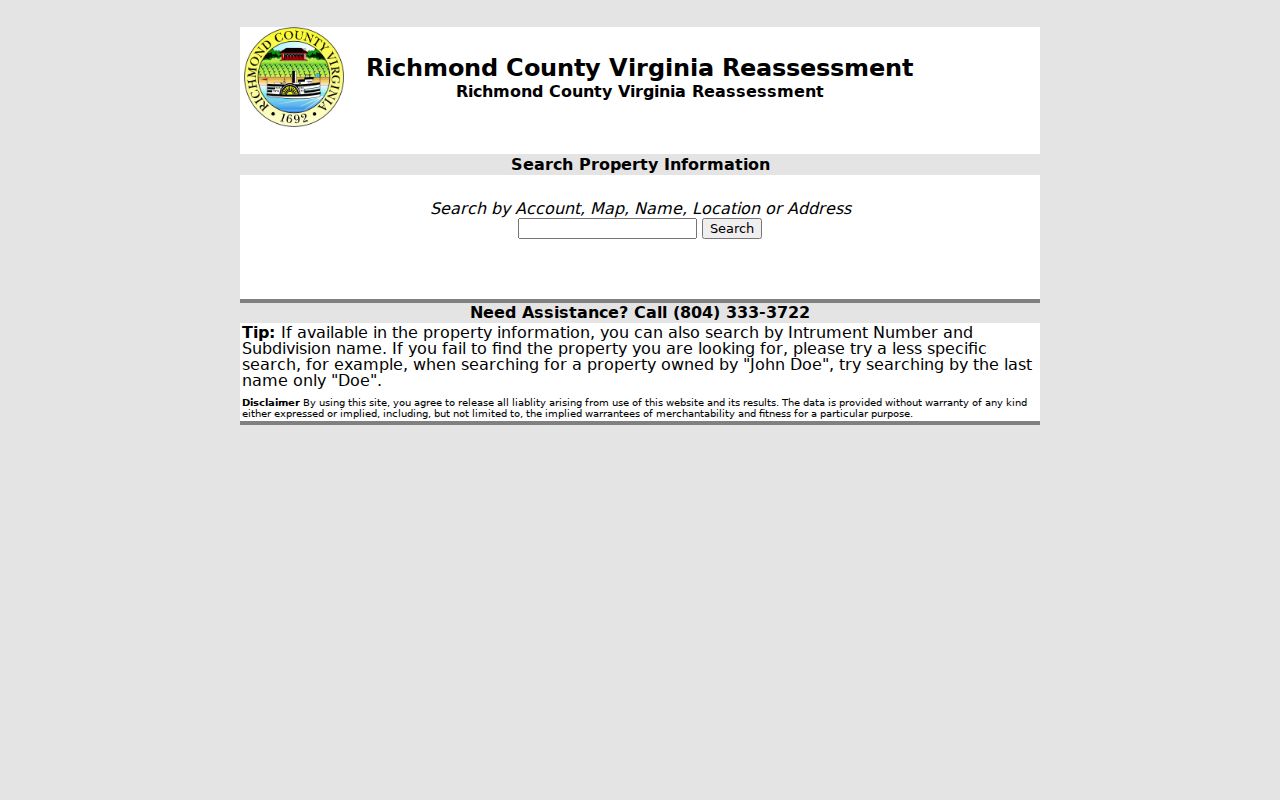
For an official value figure, the Richmond County reassessment search is the source. The county itself maintains it.
Write down the date before using any figure. It gives context for interpreting the number, not a promise that the county holds a later sale estimate for the parcel.
Look Up a Richmond County Property Value
Start with the assessor card to find the value recorded for the parcel. An address is a fine entry point. Account or Map mode works better once you know the county identifier. Save the assessment date. Save the owner snapshot date too. Note any land or improvement split the card shows. Only then compare a recorded transaction, after matching the legal description to the same property.
- Search Richmond County Property Cards by Address, Location, Name, Account or Map.
- Record the assessed total and any land/improvement values with their stated date.
- Locate a recorded deed through the Clerk's index and note consideration only if shown.
- Compare like parcels and dates; use an independent appraiser for a market opinion.
- Assessed value
- The value the county carries on its assessment record.
- Market basis
- The fair-market-value standard Richmond County says it uses for reassessment.
- Sale consideration
- The transaction amount stated in a recorded instrument, when included.
- Reassessment
- The county's general review, reported on a four-to-five-year cycle.
Richmond County Sale Price Records
A recorded deed may state consideration for a conveyance. The county property-card result does not always display a sale price. Turn to the Clerk's party index to locate the instrument. Inspect the document when image access permits. The recorded amount is a transaction detail. It does not explain financing, family transfer terms, included personal property, or parcel condition. A nominal amount, a quitclaim, or a family conveyance should not serve as a market comparable without context. Pair the deed's legal description with the property card and the current assessment date. Value questions may tie to an appeal or a bill. The separate Property Tax Records page covers those county procedures.
Warsaw Property Value Context
The county publishes no Warsaw-only sales trend. The defensible local context is Richmond County's January 1, 2024 reassessment. That reassessment uses a 100%-of-fair-market-value approach. It also relies on an owner snapshot dated December 31, 2022. A third-party sales chart cannot support a claim of townwide rise or fall. Neither can an unsupported population estimate. For a Warsaw parcel, confirm the property sits inside town limits. Do this before comparing local zoning context. The static zoning map shows residential, residential/office, commercial, and industrial classifications. Zoning is not a valuation result, though. A 321-unit Rhodes Place & Broadus Creek proposal is a planning record. It is not proof that 321 completed saleable units exist. Nor is it proof that their prices set current market value.
Richmond County Assessment Review Evidence
A strong assessment appeal starts with evidence tied to one parcel. Gather the property card, the map or account number, the assessment effective date, the legal description, and any sale documents you have. Keep them in one file. The county's administrative appeal page asks a written filing to name the taxpayer, the period and amount disputed, the remedy requested, the alleged error, and the supporting facts. Saying a value simply feels too high gives the Commissioner none of the parcel-specific detail the county describes.
Comparable sales need real work. Match acreage, access, improvement status, and the recorded parcel descriptions before you weigh any Richmond County sale against your own. The county publishes no table of comparable sales or Warsaw-only trend, so resist the urge to build one from a handful of deeds. Ask the Commissioner which form and deadline currently apply. Keep the Treasurer's tax bill out of the assessment evidence file.
Good attachments show, they do not argue. Include the card, a recent arm's-length deed if one exists, dated photographs or plans documenting the condition of improvements, and a legal description proving the comparison parcel is similar. The county's appeal guidance centers on a factual error or Commissioner error, so arrange every item around the specific field or treatment being challenged. Remember the division of labor here. The assessment is one part of a property file; the tax bill reports the amount due under that assessment.
When the amount due is the real worry, not the value, turn to the Treasurer's account inquiry and the annual bill instructions. The single annual due date, the late penalty, and the interest schedule change the balance owed. None of them changes the assessment figure itself. If a sale closed after the owner snapshot, treat the deed date and consideration only as transaction evidence. Compare the sale circumstances and parcel description before calling it a valuation comparable.
What Richmond County Assessed Value Is Not
A Richmond County assessment serves one purpose: taxation. It follows the county's general reassessment process. It is not a property-specific appraisal for a sale or loan. It may not track what a buyer would offer on any given day. The owner snapshot on the card does not confirm title either. Keep value questions separate. Search the current owner of record, deed history, and tax balance on its own.
Value versus price. The Richmond County assessed value is a tax figure, not what a property will sell for. Use an independent appraisal when a transaction needs a market opinion.